Why Carbon Fiber Is Revolutionizing Electric Wheelchair Design
How Lightweight, High-Strength Frames Solve Your Top Wholesale Mobility Pain Points
For institutional buyers and distributors, the shift from aluminum to carbon fiber isn’t just a trend—it’s a solution to user complaints, high return rates, and lost premium market share. Learn how this material is rewriting expectations for electric wheelchair performance and profitability.
How many times have you fielded the same complaint from your customers? “This electric wheelchair is too heavy to lift into the car.” “I can’t take it on the plane.” “The frame bent after six months of use.” For distributors, these aren’t just minor feedback points—they’re return requests, lost repeat business, and damage to your brand’s reputation. And they’re all rooted in one common problem: outdated materials.
Aluminum has been the go-to for mobility aids for decades, but it’s hitting its limits. Users are tired of heavy frames that make travel impossible. Caregivers are burnt out from lifting bulky chairs in and out of vehicles. Facilities are dealing with bent frames, corroded parts, and constant maintenance calls. Even premium-priced aluminum models struggle to stand out in a crowded market, leaving you stuck in price wars with thin margins.
This is where carbon fiber mobility innovation is changing everything.
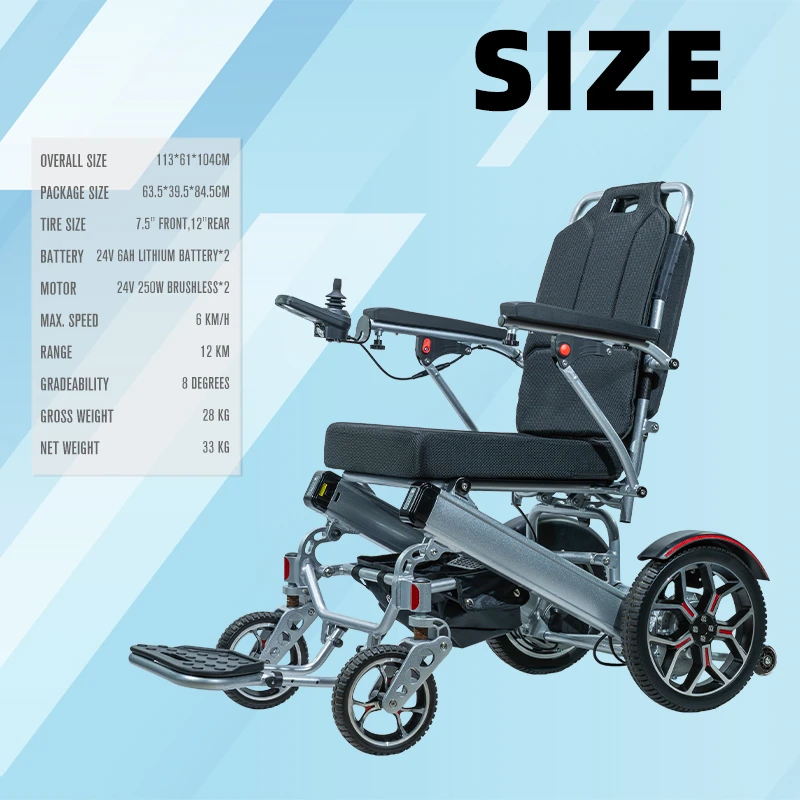
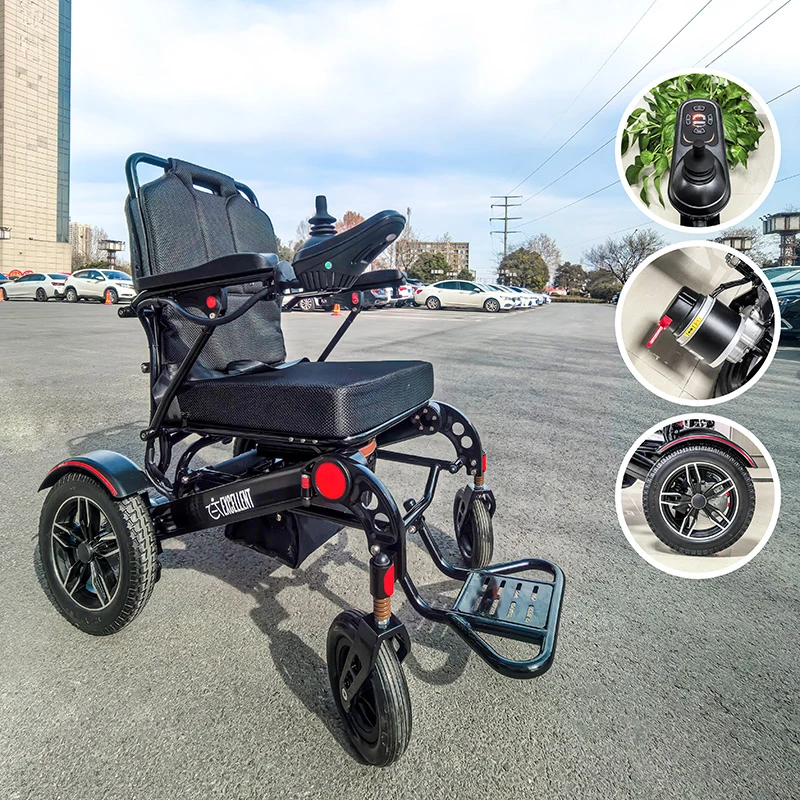
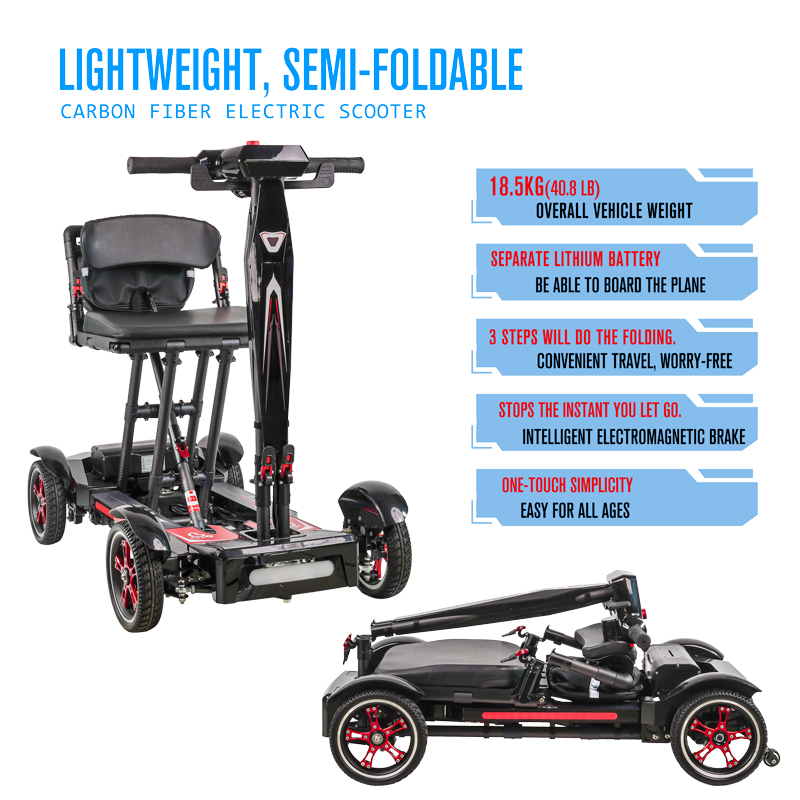
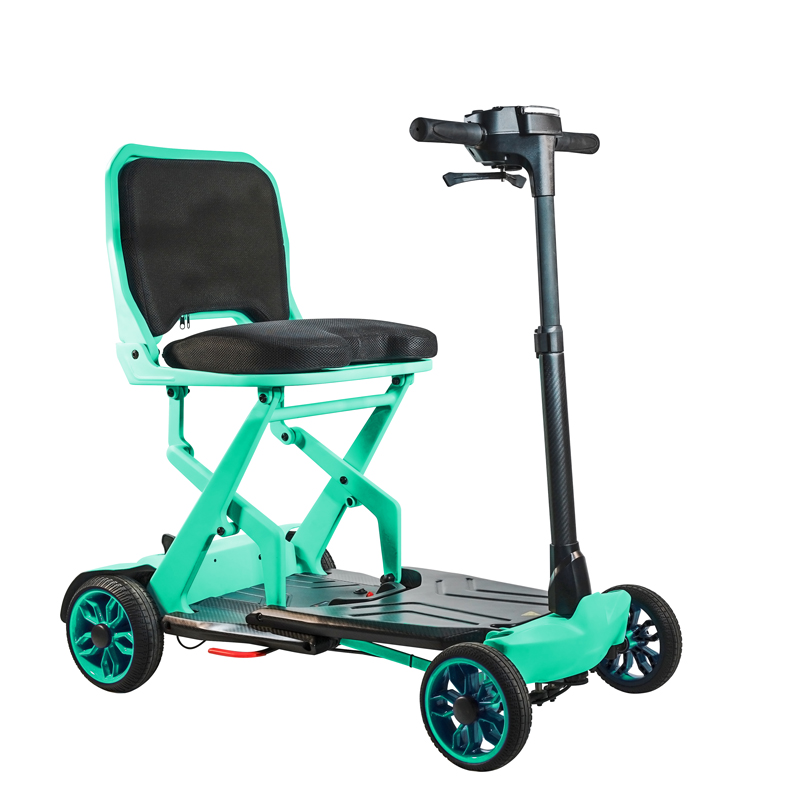
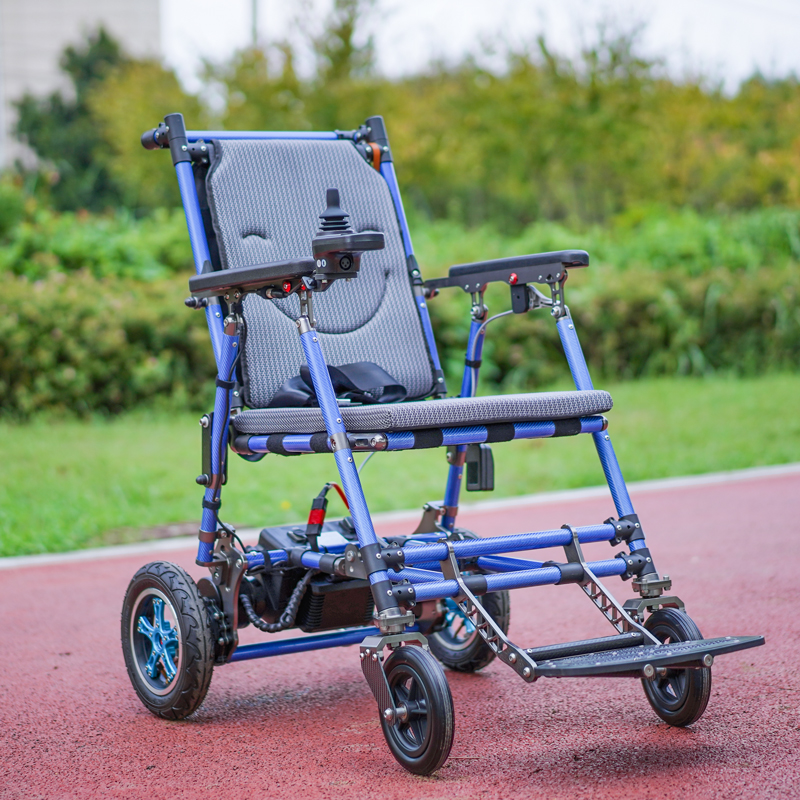
Carbon fiber isn’t just another lightweight material—it’s a wheelchair material revolution that addresses every pain point plaguing aluminum-based designs. Compared to standard aluminum frames, carbon fiber cuts weight by nearly 40%, making even fully assembled electric wheelchairs light enough for most users or caregivers to lift without strain. No more struggling to fold and carry a chair at the airport. No more complaints about bulky units taking up too much trunk space. For your customers, that means freedom. For you, that means fewer returns, happier reviews, and a product that stands out from every other aluminum model on the market.
But light weight is only half the story. Carbon fiber’s strength-to-weight ratio is unmatched, creating high strength lightweight frames that outperform aluminum in durability and stability. Frames built with carbon fiber hold their shape even after years of use, resisting bending, warping, and corrosion that plagues metal alternatives. That means fewer warranty claims, lower maintenance costs, and longer product lifespans—all of which boost your bottom line and protect your brand’s reputation for quality.
The benefits go beyond basic performance. Carbon fiber’s inherent rigidity acts as natural shock absorption, smoothing out bumps on uneven roads, cobblestones, or gravel paths. Users experience a more comfortable ride, even on rough terrain, reducing fatigue and improving overall satisfaction. The material’s resistance to moisture and temperature changes also means these chairs hold up better in humid climates, coastal areas, or outdoor environments where aluminum would quickly corrode.
For institutional buyers, these advantages translate directly to better fleet management and higher customer retention. Senior living facilities report fewer incidents of staff strain from lifting heavy chairs. Airport accessibility services appreciate the compact, lightweight designs that fit easily in overhead bins and under seats. Rental companies see longer equipment lifespans and lower repair costs. And every segment benefits from the premium appeal of carbon fiber, which lets you command higher prices without sacrificing demand.
At Suqian Excellent Science And Technology Co.,Ltd, we’ve spent years refining carbon fiber electric wheelchair designs to meet the unique needs of global distributors and institutional buyers. Founded in 2018 and based in Suqian, Jiangsu, we specialize in manufacturing mobility equipment that balances cutting-edge materials with practical, user-focused features. Our carbon fiber wheelchairs leverage frames with over 80% carbon fiber composition, paired with high-strength alloy hinges built to withstand tens of thousands of folds without wear. Every model is rigorously tested and certified to CE, ISO13485, TUV, and other international standards, ensuring compliance for markets across North America, Europe, Japan, Australia, the Middle East, and Russia.
We understand that wholesale buyers need more than just great products—they need flexible solutions. Our in-house design and engineering team offers full customization support, from custom logos and color schemes to tailored packaging and manual branding, helping you build a unique product line that stands out in your market. We keep key carbon fiber models in stock for fast delivery, support small-batch orders for testing or niche markets, and handle all export documentation with the efficiency that comes from 10 years of cross-border trade experience.
The mobility equipment market is evolving, and customers are no longer settling for “good enough.” They want chairs that are light enough to travel, strong enough to last, and comfortable enough for daily use. Carbon fiber isn’t just a material upgrade—it’s a way to future-proof your inventory, reduce operational headaches, and capture the growing premium segment of the market.
For distributors ready to leave the aluminum race behind, carbon fiber isn’t just an option. It’s the next step in mobility innovation—and the key to staying ahead of the competition.